Open-source PET scatter correction
We believe scatter estimation, like other core reconstruction building blocks, should be freely available and reproducible rather than locked away in vendor-specific black boxes. That's why openSSS, our open-source implementation of the TOF-aware single-scatter-simulation algorithm for 3D PET, is published openly on GitHub for anyone to use, inspect, and build on.
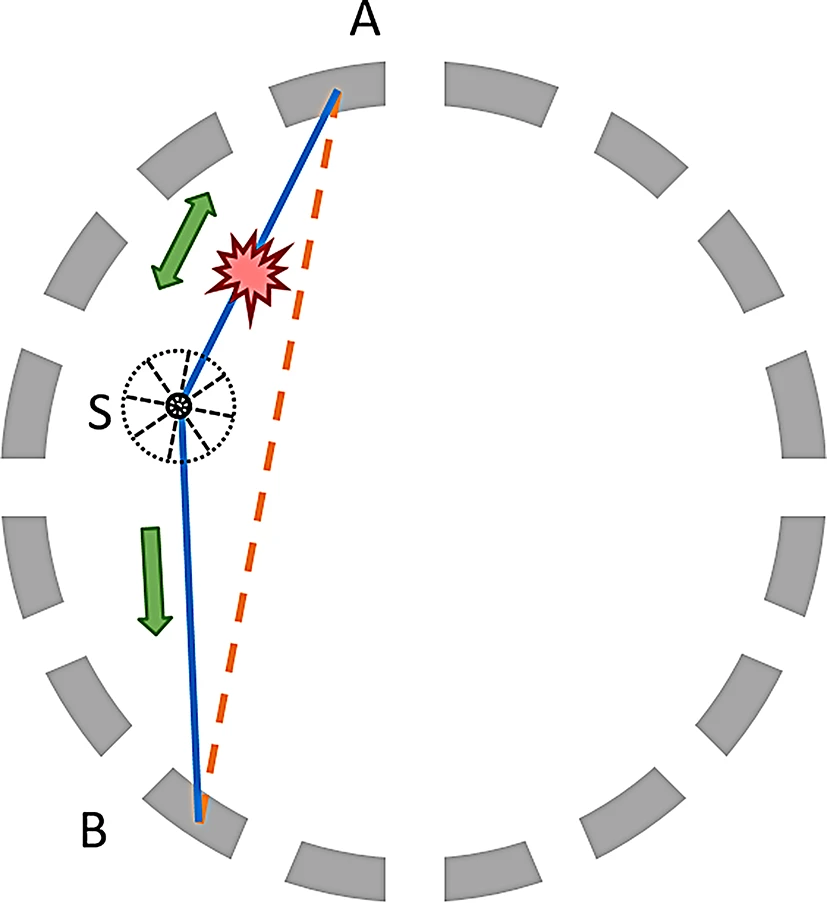
openSSS was co-developed with the developers of CASToR (Customizable and Advanced Software for Tomographic Reconstruction), the open-source toolkit for PET/SPECT/CT reconstruction, so that scatter correction integrates directly into an existing open reconstruction pipeline instead of requiring a separate, closed one.
openSSS: an open-source implementation of scatter estimation for 3D TOF-PET
Collaborators
openSSS was originally developed by:
R. José Santo1, A. Salomon2, H. W.A.M. de Jong3, S. Stute4, 5, T. Merlin6, C. Beijst1
- UMC Utrecht, Imaging & Oncology, Utrecht, The Netherlands
- Philips Research Europe, Eindhoven, The Netherlands
- UMC Utrecht, Radiology & Nuclear Medicine, Utrecht, The Netherlands
- CHU de Nantes, Nuclear Medicine, Nantes, France
- Université d'Angers, Université de Nantes, CRCINA, Inserm, CNRS, Pays de la Loire, France
- University of Brest, LaTIM, INSERM, UMR 1101, Brest, France
The Python version was developed with additional contributions by:
T. Klinsuwan1, A. Hopkins1, H. R. Kanan1, M. Colarieti-Tosti1, and J. Neele2
- KTH Royal Institute of Technology, Biomedical Engineering and Health Systems, Stockholm, Sweden
- UMC Utrecht, Imaging & Oncology, Utrecht, The Netherlands